Latest News

What to look for in an investment property

What to look for in an investment property

I’ve had a lot of rentals in my time, and one thing I’ve learnt is that the best tenant is the one that never calls you. Get the best kind of tenants with a little foresight and ongoing maintenance.

Things to look for in the property.

In general, think about the common things that you might get called out to fix.

  • Check the water pressure in the shower. Would it be acceptable to you if you had to shower there every day?
  • How does the paint look? Is it neat and presentable?
  • Is there mould? Is it warm? This comes down to insulation, both top and at the bottom.
  • Taps and fixtures. Water damage can have a huge effect and be very expensive to repair. I’ve had a whole house flood due to a cheap tap bursting, causing $120,000 worth of damage. This was a huge stress – thank goodness for insurance
  • Look for low-maintenance materials. You’ll thank yourself in the long run.

Pay attention to and be wary of the normal, routine things that you would notice if you lived there every day. These are the things that will cause you stress with a rental property that could otherwise be a low maintenance source of income. Ask yourself, would you live here? Could you rent it in its current state?

Be practical about it.

After buying your investment property, make sure you get good tenants, and that you or your property managers are doing regular checks, and most importantly, don’t leave things to get worse. Avoid having to repair things; instead. you want to be spending time and money on maintenance and prevention. Maintenance costs can be claimed back, while “improvement” right before you sell can’t.

The most important thing to remember is that maintenance keeps up the value of your investment property. While repairing is you spending money to try to get it back to where it was. Make sure you keep on top of it.

Needing a Property Inspection?

We offer detailed and thorough property inspections with a same-day turnaround!

Taking care of the roof over your head

Taking care of the roof over your head

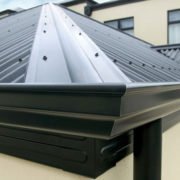
No matter the material of your roof, be it concrete tile, clay tile, decramastic tile or iron, the protective coating will eventually need to be redone.

The good news is that paint and protective coatings for roofs have dramatically improved over time, which has resulted in longer periods between them having to be redone, and also increased the periods of weather protection they offer.

Unfortunately, most of us do not budget for keeping our roofs in tip top shape, nor do we want to keep paying to keep them in such a condition, so the old saying “out of sight out of mind” can come into play quite often. But it is important if you want your roof to last, as maintenance is a key part of ensuring longevity and weather tightness.

The battle of the budget

Money spent today may save you money in the future. After all, when roofs get to the end of their lifespan, they may have to be replaced, which can be an expensive exercise.

Knowing budgets are a concern could explain why I’ve been coming across so many roofs that have been poorly recoated – perhaps they got a good price for the recoat? These people often find the coating peels off soon after being done. This brings to mind another old saying: “You get what you pay for.” This is why getting a reputable company to carry out any maintenance, or to recoat your roof, makes sound economic sense.

Sort it during summer

As the fine weather approaches, it also makes sense to carry out the required maintenance of your roof over these drier periods. If you wait until a leak occurs when the weather is wetter, it can make carrying out the work required more difficult.

I used Transformation Property Maintenance Ltd to recoat my roof, and was very happy with their workmanship, and how my roof looked after being recoated. If you need to maintain, repair, recoat your roof, consider calling Laine Dunn for a no obligation quote on 027 279 4444 or laine@rooftransformation.co.nz.

Make sure to take care if you intend to inspect your own roof, and if you have any doubts about safety, get someone else to carry out the inspection.

Needing a Property Inspection?

We offer detailed and thorough property inspections with a same-day turnaround!

Home Inspection – House Piles – What’s underneath your house?

What’s underneath your house?

Buying a house is probably the single most expensive purchase you’ll ever make.

If you’re mortgaged up to the hilt when you move in – as many people are when they buy a home or invest property – then finances can be strained if there are any immediate repair bills needed. One of the biggest things that you’ll want your building inspector to check for are the piles under your house.

What are piles?
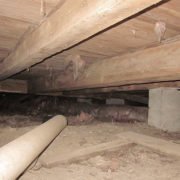
If you look under pretty much any house built in this country, you’ll see that the foundations are generally formed by wooden poles or posts, or concrete piles with wooden jack studs. Their purpose is to evenly distribute the house’s weight across the soil. The house, in turn, should be built to distribute its weight evenly over the piles so that the house stands straight (and not on a slope).

Some older houses are built on tree stump piles. Nothing lasts forever, and over time you can find that the piles have rotted away and the house’s weight has become unevenly distributed. Sometimes you’ll find that a house has been re-piled. A couple of signs that this has happened are that the piles have been made from tanalised (H5) pine. It’s also fairly common to spot a few new piles in with old wooden ones. Today’s Building Standard requires foundations to have seismic connectors to give the foundation strength in an earthquake.

Does my house need re-piling?
Your house may need re-piling if some or all of the piles are moving. Moving causes the house to twist, and crack, causing damage. To stop the damage getting any worse, it will be necessary to re-pile your house. Sometimes it’s really obvious that your house will need re-piling, such as when it’s sloping – although usually the signs are more subtle.

What does re-piling involve?
Essentially you’ll have to dig new piles into the ground and realign the house to its new foundation. It’s also important to understand what caused the piles to move in the first place. Was it poor soil, rotting wood, or water damage? Some of these issues may need to be fixed before you can even think about re-piling.

If re-piling sounds like a hard process…that’s because it is. Re-piling is a major job, and isn’t for the typical DIYer! This is Restricted Building Work and is required to be carried out by a Licenced Building Practitioner, and may need a Building Consent. That’s why it’s so important to find out these things before you sign a contract. By negotiating for something to be fixed, or re-negotiating prices based on a problem that you’ve found, a building inspection report can more than pay for itself.

Needing a Property Inspection?

We offer detailed and thorough property inspections with a same-day turnaround!

Common trap: People who don’t know they need building consents

Common trap: People who don’t know they need building consents

This month I’d like to talk about building consents, because it’s such a common trap that I see people unwittingly fall into all the time.

This is especially true around winter time when people put insulation into their walls, assuming that will be fine. But in actual fact, you need to get a building consent before you can carry out any work for an external or internal wall functioning as a fire separation wall.

Too often I’ve met people who have cheerfully told me that they had insulation installed into their floors, ceilings and walls so that the house would be warmer. I’ve then had to tell them that installing insulation into the walls does not comply with the Building Act.

If you’re planning any construction activity for your property I strongly advise you seek advice as to whether a Building Consent is required. This may include plumbing and drainage, heating (fireplaces), air conditioning systems, swimming pool fences, or any other additions or alterations. Failing to comply with the appropriate Building Codes and Local Territorial Authority (Council) District Plans, may cause difficulty in selling a property in the future. Insurance companies may be unwilling to insure your house, or you could get locked into a dispute with them if there’s any damage. The worst case scenario would be the council requiring the non-compliant work to be removed.

In case you’re wondering, here are some instances where you do not need a building consent.

If there is any doubt, I suggest you seek clarification and confirmation before any work is carried out. Licensed building practitioners can be prosecuted for carrying out restricted building works without a building consent.

You can’t apply for a building consent retrospectively (although in some circumstances you may be able to apply for a certificate of acceptance or COA).

It would be far easier to get it right at the start to make to process of selling your home easier for you, your solicitor, and the real estate agent. Selling you home can be a stressful enough time without the unneeded issues of having to deal with non-consented works.

Needing a Property Inspection?

We offer detailed and thorough property inspections with a same-day turnaround!

Want to freeze your power bills this winter?

Want to freeze your power bills this winter?

Brrr…This winter weather is a daily reminder of how important it is to make sure your house is insulated properly.

Good quality insulation won’t just keep your home cosy and warm in winter; it’ll also keep the heat out during summer. In other words, with proper insulation, your house will be a comfortable temperature all year round, as well as cheaper and easier to heat.

Cold, damp houses are a serious problem in New Zealand, and anyone who has been following the news will know that it causes health issues for thousands of people around the country. Hundreds of thousands of houses are believed to have insufficient insulation. If you need to get some installed yourself, then the priority should be:

1. Ceiling
2. Underfloor
3. Walls
4. Windows

Often people look for insulation in their ceilings and walls. Once they see the Pink Batts, or other type of insulation, they figure that they home should stay warm. But then they forget about checking for insulated floors. See if you can check under the property for the underfloor heating. If there’s no insulation there, then it’s best to get some – you’ll really notice the difference. Similarly, it’s best to remove the old insulation and replace it with new insulation if it has gaps or missing bits, if the insulation has been damaged, or if it doesn’t extend under the whole floor.

Floors and ceilings can benefit from added insulation, and the rule here is that you can never have too much! But beware – if you need to put insulation in the walls then you must have a building consent.

Also, hundreds of dollars fly out the window – literally – in lost heat through single glazed windows. I’ve talked about double glazed windows previously, but it’s worth mentioning again that in New Zealand, double glazing isn’t standard. Nevertheless, it’s incredibly useful for retaining the heat, and will often end up paying for itself. Not to mention, it really helps with noise reduction, so if you live near a busy road then that can be a real bonus!

A lot of housing, especially in Auckland, is substandard and requires better insulation. Just because a property owner or agent claims that the property is fully insulated, that doesn’t mean that it definitely is. Check all of the areas of the house from the ceiling and underfloor, to the walls and windows.

In fact, a house may require quite a lot of work just to make it a healthy and safe place to live. If you don’t know how to check the insulation, then I can do that for you as part of the property inspection.

Needing a Property Inspection?

We offer detailed and thorough property inspections with a same-day turnaround!

Can you spot a ‘P’ house?

Can you spot a ‘P’ house?

Perhaps you saw an article in the NZ Herald this weekend about a ‘P’ house. A solo mum and her two children were living in the home when a neighbour tipped them off that it could be contaminated by P.

After getting tests for P residue done, it was found that the drug levels were 25 times over the safety limit! Said the mother, “I was horrified. I know residue from that drug is toxic and I had real worries for my family’s health.”

‘P’ houses cost thousands

P can contaminate a home, even if it’s not being cooked there. Just smoking P can cause a home to become contaminated – and there aren’t necessarily any visible signs of it.

The thousands it could cost you if you accidentally buy a P house is far more costly than getting your house inspected. P houses aren’t just restricted to the ‘dodgy’ suburbs either. A clean home or a house in a good area is no guarantee that the house is safe. Although the cost of decontaminating a home varies, you should realistically be expecting thousands of dollars – and in some cases well over $10,000.

Living in a ‘P’ home affects your health

High enough P levels can cause serious illness and birth defects. You may think that a visual inspection of the property will tell you what you’re getting, but that’s dead wrong. Some of the most costly problems a house can have will come from things that you can’t see. Looking at the cracks, insulation, heating, and so forth is just part of a proper property inspection.

Testing for P is a speciality service that I do not provide, but there are several companies that do. Make sure you do your research first and check what they test (and to what degree). Because as the old saying goes – you get what you pay for!

Needing a Property Inspection?

We offer detailed and thorough property inspections with a same-day turnaround!
Watch out for these common home problems

Watch out for these common home problems

When buying a property, all the existing issues in a house become your responsibility, which is why it’s important to keep an eye out for them first.

As sellers, it’s good to be prepared as well for any issues that you might not have considered so that you can identify and address them.

The rickety roof

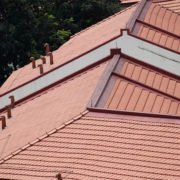
Roofing repairs can be surprisingly costly, and should definitely be factored into what you’re prepared to pay for a home if you know that repairs will need to be made in the near future. The roof is the crowning glory of any home, and one that’s damaged or leaking can cause even bigger problems within the house a bit further down the track.

Old home appliances

Check whether the appliances (assuming they’re coming with the house) are working. Buying a new washing machine and dishwasher may not seem a lot in the grand scheme of things, but that’s money you’ll soon have to pay upfront, which you may not have considered within your budget.

Collapsing handrails

Handrails seem like a relatively minor problem too, but they can spell trouble when they fail! Test the handrails, especially on elevated decks, to make sure that they’re safe. You don’t want anyone getting hurt!

Problem plumbing

When it comes to plumbing, the phrase “out of sight, out of mind” seems to hold true. Many people don’t consider whether the plumbing will be a problem, but as I mentioned in an earlier newsletter, if your home has Dux Quest pipes then replacing them may cost you thousands of dollars. So make sure to check before you buy!

Where’s the insulation?

Proper insulation is a must-have, but a lot of older homes have inadequate insulation. Summer is often a popular time to buy, and if you only inspect the house then, you might not realise the house is bad at retaining heat. Then suddenly, come winter, your power bill shoots through the roof!

Bad ventilation

Houses without proper airflow often develop real mould problems – I think we’ve all seen some wooden villas with these problems! If you’re noticing a lot of mould, then check that there is good airflow through the house, especially in regards to the laundry and bathroom. Bathrooms often get very mouldy because of all the moisture, and it’s not a healthy environment to be living in.

Nothing replaces a proper total home inspection report, but these are some of the signs that are worth knowing about if you’re buying or selling a house. If you have any questions, then you can always get in contact with me.

Needing a Property Inspection?

We offer detailed and thorough property inspections with a same-day turnaround!
How real estate agents and home hunters spot water damage

How real estate agents and home hunters spot water damage

I don’t need to tell you how risky it might be to buy a house with water damage.

Water damage can be caused by a few different factors, such as flooding, burst pipes, or a leaky roof. Although your best bet is to get a property home inspection if you want a proper job done, there are some signs that you can look out for:

Sign #1: Check whether wooden panels are warped or stained.

Whenever water sits for any length of time on a hardwood floor, it will leave a distinctive mark. Usually it’s pretty easy to spot if the water has puddled in areas. Similarly, look out for wooden panels (either walls or floorboards) that have warped, which could be due to water damage.

Sign #2: Crumbling wood areas

Have a careful look at the windows – what you should be looking for is signs of crumbling wood or significant levels of mould. These are both signs of efflorescence, meaning that water is seeping through bricks, concrete or blocks and infiltrating this area.

Sign #3: Look at the ground outside.

One massive clue to watch out for is whether the ground around the house is uneven or not. If there has been flooding, then the ground might be level with the foundation, but then sharply drop off by several inches.

Sign #4: Water stains outside or in the basement.

Look closely at the foundations of the house, or if you can, go into the basement. If there has been flooding then there will often be stains left behind. It’s an interesting thing actually – people often clear the house of any of these tell-tale signs, but then forget about the basement entirely.

Sign #5: Soft and discoloured baseboards

When you’re looking for damage to the walls, make sure that you check the baseboards (these are the narrow wooden boards running along the base of the interior wall). If it’s discoloured, then that could be a sign that there has been water damage. Give it some soft taps with a rubber mallet, and if it doesn’t bounce back, then that’s a very bad sign.

Water damage is not restricted to old houses – they can also affect new builds. Just think of the number of leaky homes and buildings that pop up in the news! This list is by no means exhaustive, but it should hopefully give you an idea of some of the warning signs that you can look out for at an open home.

Needing a Property Inspection?

We offer detailed and thorough property inspections with a same-day turnaround!
When the DIY dream becomes a nightmare

When the DIY dream becomes a nightmare

Kiwis have this fantastic do-it-yourself attitude, and are often quite happy to take on a home renovation project themselves. TV shows like ‘The Block’ have only worked to reinforced that culture.

But the DIY dream can quickly turn into a nightmare. The problem I see is that DIY is sometimes done without a consent, or things are not built in accordance with the Building Act. Want to know what building work requires a consent?

The DIY job itself can be really shoddy too, and anyone unfortunate enough to buy such a house is usually taking on a pretty hefty repair. Unfortunately many well-intentioned DIY-ers simply lack the skills to do the jobs that they want to. Property Inspectors, like myself, can usually spot when a DIY enthusiast has renovated parts of a house – it screams out to us that the work wasn’t done properly.

Don’t do DIY?

DIY doesn’t need to spell disaster, but if you’re a DIY enthusiast then it’s best to get advice from a professional and find out what the legal restrictions are before you embark on any projects. If you’re not sure whether you can do it or not, then you almost certainly shouldn’t be! You might end up saving money and heartache by having a builder do it in the first place.

A survey taken a few years ago found that DIY jobs can reduce a house’s value by as much as 5%. At a time when the Auckland property market is red hot, it hardly seems worth creating such a mess.

Renovation botch-ups can cost thousands, and lead to shoddy work like leaky homes, rotting decks, and unstable walls and roofs. One builder went on record as saying that the most expensive fix he’d ever had to do was for a badly repaired roof, which had ultimately put his customer a staggering $50,000 out of pocket!

The worst offenders

Of course, the worst DIY jobs that I see usually come from people who didn’t bother to get building consents to do an important project, like add on an extension. Then they’re passing on the problem to the next buyer – which is one of the many reasons why getting a property inspection is so important!

Needing a Property Inspection?

We offer detailed and thorough property inspections with a same-day turnaround!

Hidden leaky pipes spring massive bills for homeowners

Hidden leaky pipes spring massive bills for homeowners

You may have heard of Dux Quest pipes, an issue that has been discussed on news shows in recent years.

They were eagerly installed in most houses built during the late 1970s or the 1980s. However, it was later discovered that Dux Quest pipes have a major flaw – they are prone to springing leaks!

Simply patching up the problem may seem like the obvious solution, right? But there’s not a lot of point in doing that since new leaks will just keep popping up again and again. I’d love to be able to give you a simple solution if you do have Dux Quest pipes, but the sad reality is that you’ll probably end up having to replace your house’s plumbing system.

Could you have Dux Quest pipes?

These distinctive black pipes are, even now, still present in tens of thousands of houses. It has become a major headache for insurance companies, who over the years have come to understand how extensive the problem is. Owners of houses built during the late 1970s – 1980s are seeing their insurance prices rise as a result.

Do you know what’s even scarier? If an insurance company is aware that your house has Dux Quest piping, then many of them won’t foot the bill for any plumbing leaks that spring up. That’s because Dux Quest is already known to be such a potential hazard.

So imagine your pipes spring a leak, causing water damage to your house. You might end up having to cover that repair bill with the money out of your own pocket, and then spend thousands to replace your house’s plumbing system! How many people can afford that?

It’s important to get a property inspection, which can tell you if the house has any clear signs of Dux Quest pipes.

Needing a Property Inspection?

We offer detailed and thorough property inspections with a same-day turnaround!